One commitment
A reset becomes hard to evaluate when every routine changes at once.
A bounded seven-day experiment
Use seven days to make one action specific, reduce friction, and collect enough evidence to decide what belongs in the next week.
Start the checklist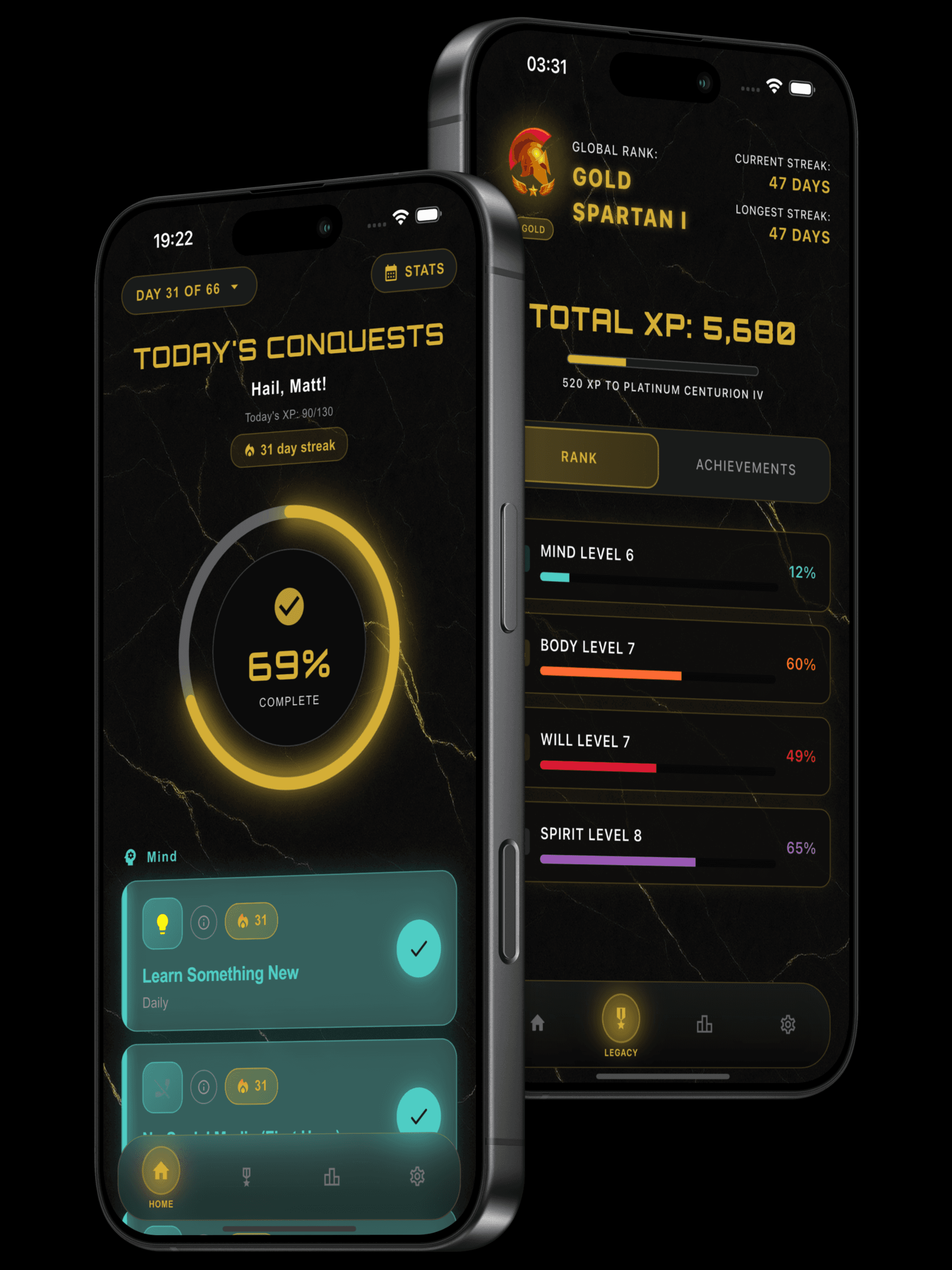
A reset becomes hard to evaluate when every routine changes at once.
Decide in advance what counts on a difficult day.
Track completion consistently so the review is based on evidence.
The checklist
Pick one action that matters and can be completed today. Do not reset your whole life at once.
Write the smallest version that still counts so a busy day does not force an all-or-nothing decision.
Choose a time, place, or existing routine that tells you when to begin.
Prepare what you need, shorten setup, or move the action to a more realistic part of the day.
Mark the action when it is done. Use the record as evidence, not as a judgment of your identity.
Keep the same commitment for one more day. Consistency is the test; intensity is not.
Keep, shrink, move, or replace the action based on what actually happened. Change one variable at a time.
Where Victus fits
Victus turns goals into a structured 66-day plan with daily tasks, XP, ranks, streak progress, and a global leaderboard. It can help you plan and track the action; it does not guarantee discipline or complete the work for you.


The stores show current availability and subscription terms before you download or purchase.
No. Keep one commitment stable for the seven-day reset so you can see whether the size, cue, and friction are workable.
Resume with the minimum version on the next available day. Do not add punishment work or restart the calendar.
No. Seven days is a short diagnostic window for making the action clearer. Longer-term consistency still requires repeated action and adjustment.