Workout
Change clothes and complete one planned set.
A system for low-motivation days
Motivation can help you start, but it is not a reliable daily cue. Make the next action small, specific, and visible enough to begin without negotiating with your mood.
Build your minimum-action system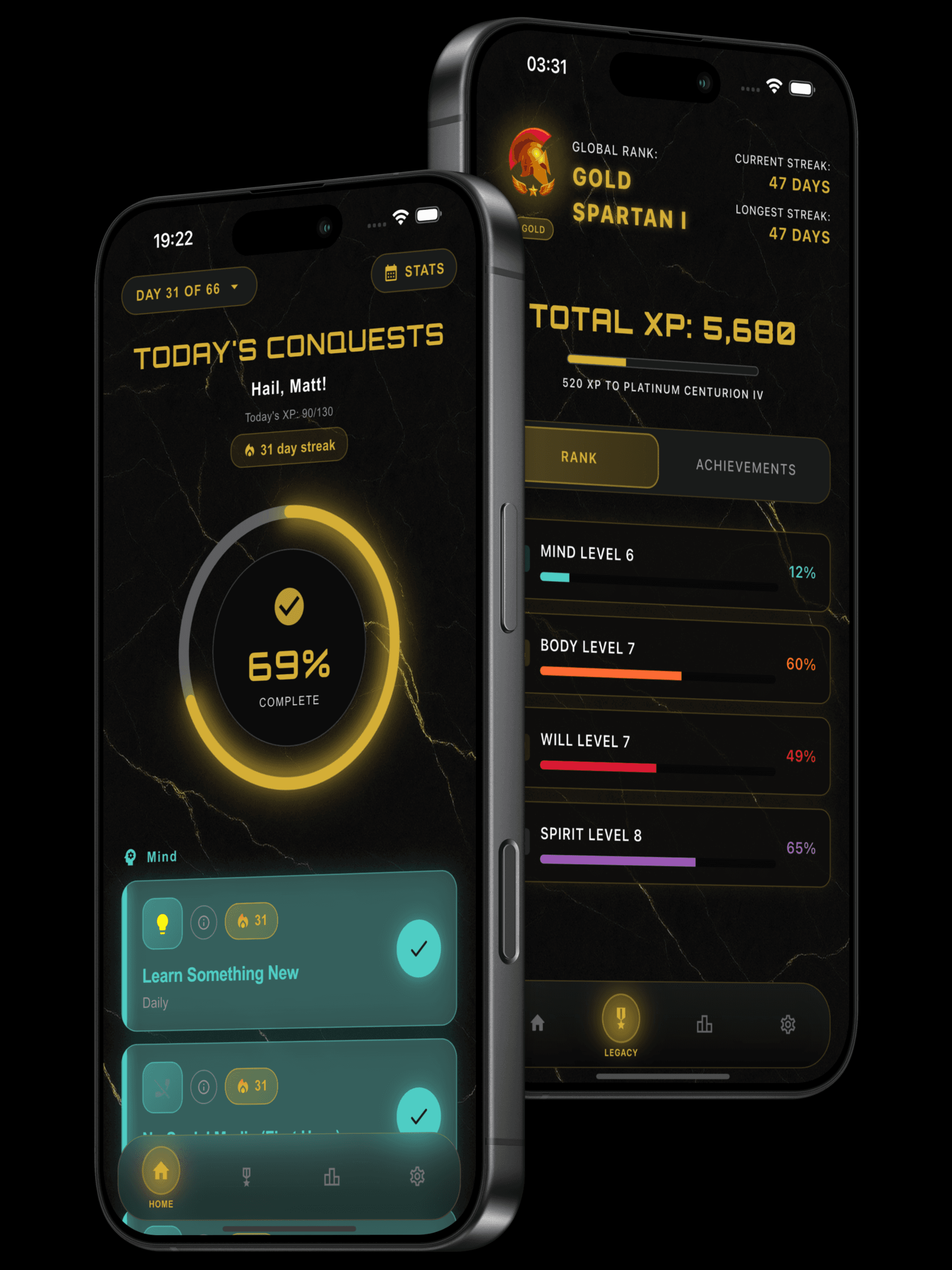
Five decisions
Pick one action that matters today. Multiple new commitments make it harder to see what is working.
Write the smallest useful version that still counts on a difficult day. Make it concrete before motivation drops.
Put the action after a time, place, or routine that already happens. The cue should answer when to begin.
Prepare the first tool, screen, or location in advance. Remove one obstacle instead of demanding more willpower.
Mark completion when it happens. Review the evidence after several attempts, not your mood before one attempt.
Minimum-action examples
Change clothes and complete one planned set.
Open the book and read one page.
Write one sentence in the active document.
Choose tomorrow’s single first task.
The minimum is a floor for difficult days, not a promise to stop early. If momentum appears, continue. If it does not, the completed minimum still gives you evidence and a clean next attempt.
Where Victus fits
Victus turns goals into a structured 66-day plan with daily tasks, XP, ranks, streak progress, and a global leaderboard. It can help you plan and track the action; it does not supply motivation or guarantee consistency.


The stores show current availability and subscription terms before you download or purchase.
The minimum should still move the task forward. Its job is to remove the decision to do nothing, not to replace every full session.
Change one condition: reduce setup, move the cue, or choose a more realistic time. Keep the action stable while testing that adjustment.
No. It means returning to the planned action often enough to evaluate and improve the system. A missed day is information, not a reason to abandon the plan.